
FIRE SAFETY COMPLIANCE
Fire Stopping Inspection UK
IFI Group provides independent fire stopping inspection services across the UK, helping clients verify that penetration seals, linear joints and compartmentation interfaces are installed to suitable tested or assessed details. Our support can help with:
- Independent fire stopping inspections for buildings across the UK
- Inspection of service penetrations, risers, wall-heads and linear joints
- Review of installed fire stopping against product evidence and site conditions
- Identification of defects, missing evidence and unsupported installation details
- Clear reporting to support remediation, handover and Regulation 38 evidence
UK Regulatory Compliance
Experienced Fire Specialists
Audit-Ready Reports
Trusted By Clients Nationwide
Independent Fire Stopping Inspection Services
Fire stopping plays a critical role in maintaining compartmentation and helping prevent the spread of fire and smoke through walls, floors, risers, shafts and service openings.
IFI Group supports clients, contractors, responsible persons and dutyholders by inspecting installed fire stopping and reviewing whether the visible installation appears consistent with the available evidence, project requirements and intended fire resistance period.
Our approach is practical, technical and evidence-led. We do not treat fire stopping inspection as a simple visual check. We consider the product used, the supporting construction, the type of service, the aperture size, the annular gap, the fire period, the installation method and any project-specific assessment or manufacturer detail that may apply.
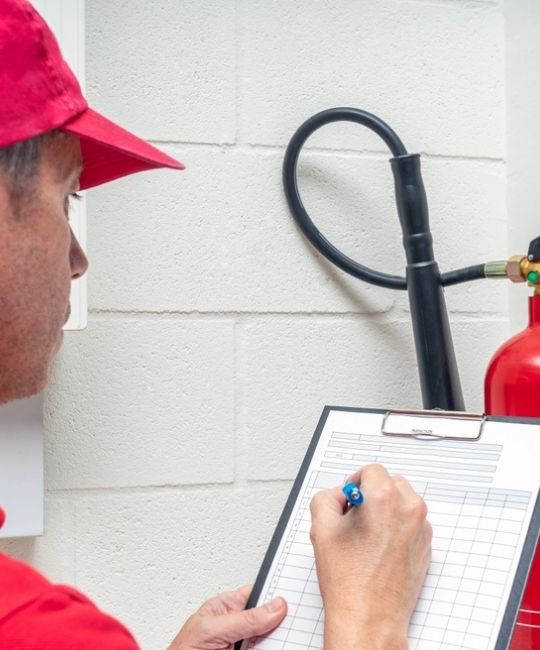
What We Inspect
IFI Group can inspect a wide range of fire stopping and compartmentation details across new-build, refurbishment, remediation and occupied building environments.
This can include service penetrations, mixed service openings, pipe collars and wraps, cable trays, cable baskets, dampers, batt and mastic seals, linear joints, wall-head details, shaft wall penetrations, risers and fire stopping around mechanical, electrical and plumbing services.
We can also review more complex or higher-risk areas where multiple services pass through a single opening, where several products have been used together, or where the installed detail does not clearly match a standard tested arrangement.
Evidence-Based Fire Stopping Inspection
Good fire stopping inspection is not just a visual review of whether an opening has been sealed. A seal may look complete, but still fall outside the tested or assessed scope if the wrong product has been used, the substrate is unsuitable, the annular gap is excessive, or the service arrangement is not supported by the evidence.
A robust inspection should compare the installed condition against the relevant product evidence, substrate type, service type, aperture size, annular gap, support requirements, fire resistance period and any project-specific assessed detail.
Where this evidence is missing, unclear or inconsistent with the site condition, the inspection should identify the limitation and recommend what further information, opening-up, manufacturer input or remedial action may be required.
Common Fire Stopping Defects
Fire stopping defects are often found where services have been added, altered or repaired without the original compartmentation strategy being properly maintained.
Common defects include missing labels, unsupported services, incorrect products, excessive gaps, poor seal depth, mixed systems, unsealed penetrations, damaged seals, inaccessible installations, incomplete fire stopping around dampers, missing evidence and details outside the tested field of application.
We also commonly identify issues where fire stopping has been installed before services were properly supported, where multiple trades have altered the same opening, or where later works have disturbed previously completed seals.
Identifying these issues early helps clients understand what needs to be remediated, what evidence is required and which areas may need further inspection before close-out.
Best Fit Projects
Fire stopping inspection is suitable for commercial buildings, residential blocks, high-rise residential buildings, healthcare premises, education buildings, government properties, care settings, industrial facilities, hotels, mixed-use developments and construction or refurbishment projects.
It is also valuable during remediation schemes, fire risk assessment follow-up works, passive fire protection audits, handover reviews, intrusive compartmentation surveys and projects where fire stopping evidence is incomplete or disputed.
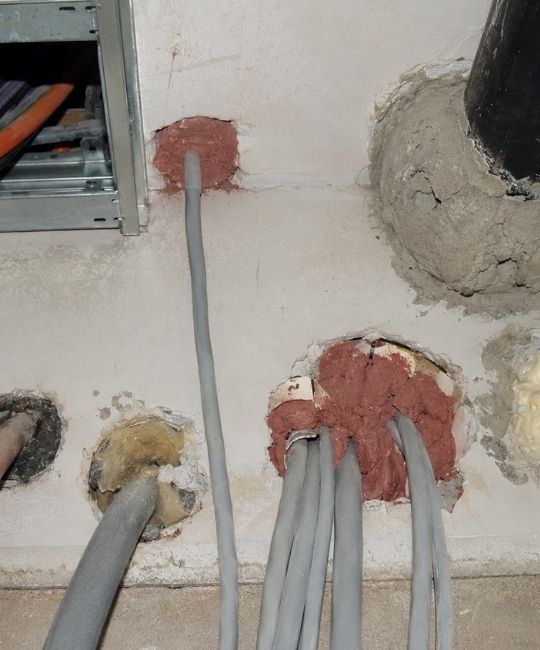
Reporting And Close-Out Support
IFI Group can provide clear, structured reports to help clients understand what has been inspected, what defects have been identified and what actions may be required.
Typical reporting can include photographic evidence, defect schedules, location references, pin-based observations, risk commentary, recommendations, evidence gap notes and close-out review following remedial works.
Our reports are designed to support practical action. They help project teams, building owners, contractors and responsible persons understand where fire stopping appears incomplete, unsupported or inconsistent with the available evidence.
Supporting Handover And Regulation 38 Evidence
Fire stopping inspection can play an important role in supporting handover records, project quality assurance and Regulation 38 evidence packs.
IFI Group can support evidence gathering and review within the agreed appointment scope, helping clients identify whether installation records, product data, photographs, pin records, test evidence and remediation records are sufficiently clear.
Where information is missing, the report can help define what additional evidence, inspection, remedial work or specialist input may be needed before the fire stopping package is accepted or closed out.
Fire Stopping Around Risers And Service Shafts
Risers and service shafts are often high-risk areas because they can contain large numbers of services passing through compartment floors, walls and shaft enclosures.
IFI Group can inspect riser penetrations, shaft wall details, mixed service openings, fire stopping around pipes and cables, damper interfaces, floor seals and areas where compartmentation may have been compromised by later works.
Where risers are due to be closed up, inspection should ideally take place before access becomes restricted. Retrospective inspection is possible, but concealed areas may require opening-up or representative investigation to confirm the condition of hidden fire stopping details.
Request An Inspection Scope
IFI Group can review the available information, identify likely evidence gaps and help advise on the most appropriate next step for fire stopping inspection, remediation review or close-out.
Fire Stopping Inspection UK FAQs
Can you inspect installed fire stopping retrospectively?
Yes. Installed fire stopping can often be inspected retrospectively, but the level of confidence will depend on access, visibility and the quality of available evidence.
Concealed or inaccessible areas may require opening-up, representative investigation or further supporting documentation before the installation can be properly reviewed.
Do you inspect risers?
Yes. Risers are a key area for fire stopping inspection because they often contain multiple service penetrations through compartment floors, walls and shaft enclosures.
Where possible, risers should be inspected before closure so that fire stopping around services, dampers, pipework, cables and mixed penetrations can be properly reviewed.
Do you provide Regulation 38 support?
IFI Group can support evidence gathering and review for handover documentation within the agreed appointment scope.
This can include reviewing photographs, pin records, product data, test evidence, installation records, defect schedules and close-out information relating to fire stopping and passive fire protection works.
What does a fire stopping inspection include?
A fire stopping inspection can include visual inspection of service penetrations, linear joints, risers, shaft walls, dampers, batt and mastic seals, pipe collars, wraps, cable trays and compartmentation interfaces.
The inspection should also consider whether the installed detail appears consistent with the available product evidence, substrate, service type, aperture size, annular gap and fire resistance requirement.
What are common fire stopping defects?
Common defects include missing or incorrect products, unsealed openings, unsupported services, excessive gaps, poor seal depth, damaged seals, mixed systems, missing labels, inaccessible installations and details that fall outside the tested or assessed scope.
Defects can also occur when later works disturb previously completed fire stopping.
Why is evidence important in fire stopping inspection?
Evidence is important because a fire stopping detail needs to be supportable, not just visually complete.
The correct product, service type, substrate, aperture size, annular gap, support condition and fire resistance period all need to align with suitable test evidence, assessment data, manufacturer guidance or project-specific technical review.
Browse Our Resources
Our Services
Practical passive fire inspection services covering fire doors, compartmentation, fire stopping and key life safety measures.
Accreditations
Trusted fire safety expertise supported by recognised training, professional standards and inspection-led knowledge.
Learn About Us
Experienced fire inspection specialists helping clients identify defects, reduce risk and maintain safer buildings.
Read Our Blogs
Useful fire safety guidance, inspection advice and updates on passive fire protection, compliance and building safety.
Request A Fire Stopping Inspection








Send Us A Message
Need A Professional Fire Door Inspection?
Speak to Independent Fire Inspections for clear, practical fire door inspection support. We provide detailed inspection reports, photographic evidence and remedial recommendations to help you understand the condition of your fire doors and manage your fire safety responsibilities.