
FIRE SAFETY COMPLIANCE
Intumescent Coating DFT Surveys
IFI Group provides DFT survey support and technical review for intumescent coatings applied to structural steel. Our support can help with:
- Dry film thickness surveys for intumescent coatings on structural steel
- Review of DFT readings against fire period and steel member requirements
- Assessment of coating condition, continuity, curing and visible defects
- Identification of under-thickness, omissions, delamination and evidence gaps
- Clear reporting to support remediation, handover and passive fire close-out
UK Regulatory Compliance
Experienced Fire Specialists
Audit-Ready Reports
Trusted By Clients Nationwide
Technical Review Of Intumescent Coating Thickness
Dry film thickness surveys help determine whether installed coating thicknesses are consistent with the required fire resistance period, manufacturer loading tables, coating specification and steel member requirements.
Intumescent coatings are designed to expand when exposed to heat, forming an insulating char layer around structural steel. For the system to perform as intended, the correct coating thickness must be applied to the relevant steel members in line with the required fire resistance period and manufacturer specification.
A DFT survey records the dry film thickness of the coating after application. The results should be linked to steel member references, section factor data, fire resistance periods, coating product, specification requirements and the wider fire protection strategy.
IFI Group helps clients, contractors and project teams review DFT evidence in context, so that readings are not viewed in isolation. We consider what has been measured, where readings were taken, what evidence supports the coating system and what defects or limitations may affect acceptance.
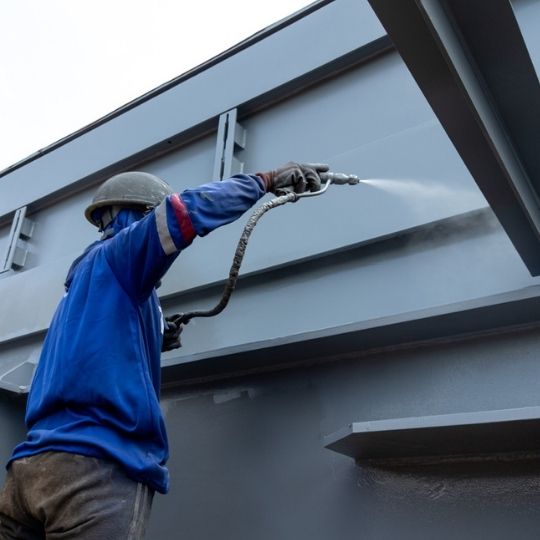
What DFT Surveys Show
A DFT survey provides a measured record of coating thickness at agreed locations across protected steelwork.
This can help identify whether intumescent coating application appears consistent, whether specific members may be under-thickness, and whether further review or remedial action is required.
Good DFT records should be clearly linked to steel member references, fire resistance periods, section factors, coating specifications, manufacturer loading tables and coating system sequence.
This allows the readings to be reviewed against the actual project requirements, rather than treated as standalone numbers.
DFT survey results can be useful during installation, quality assurance checks, handover reviews, defect investigations and remediation planning.
What DFT Surveys Do Not Prove
DFT readings do not prove compliance on their own. A coating can appear to have sufficient thickness but still be defective if it is soft, uncured, delaminated, contaminated, poorly adhered, incompatible or not installed as part of the tested manufacturer system.
A complete review should also consider surface preparation, primer compatibility, basecoat and topcoat sequence, environmental conditions, curing, adhesion, coating continuity, impact damage, repair records and whether the installed system matches the manufacturer’s tested or assessed requirements.
For this reason, IFI Group reviews DFT survey information as part of the wider structural steel fire protection evidence, helping clients understand what is supported, what remains uncertain and what further action may be required.
When To Commission A DFT Survey
DFT surveys can be useful at several stages of a construction, refurbishment or remediation project. They are often commissioned during installation, before topcoat application, before areas are closed up, at handover, during quality audits, or where previous inspections have identified under-thickness, inconsistent application or missing coating evidence.
They can also be valuable during defect investigation, particularly where coating damage, delamination, poor curing, patch repairs, water exposure or later works may have affected the original intumescent protection.
Early DFT review helps reduce the risk of discovering coating issues after ceilings, walls, services or finishes have made access more difficult.
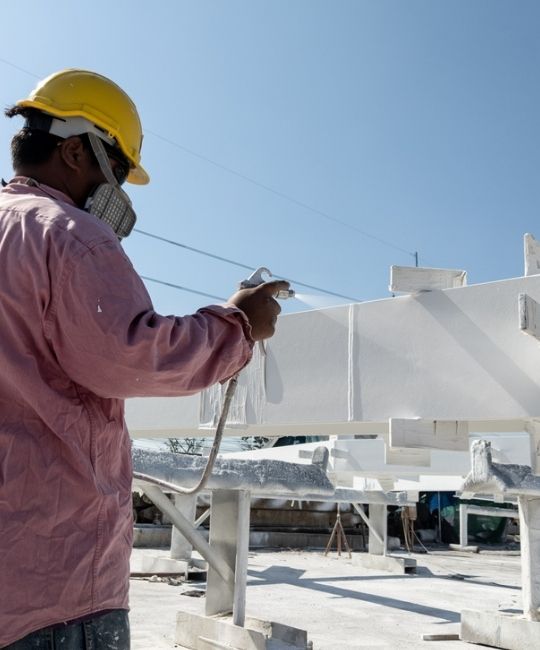
Evidence To Collect During An Intumescent Coating DFT Survey
A useful intumescent coating evidence pack should contain more than DFT readings alone.
Key information can include steel schedules, steel member references, fire resistance period requirements, section factor data, coating specification, DFT readings, calibration records, photographs, coating batch information, product data sheets, primer and topcoat information, environmental records, repair records and manufacturer confirmation where required.
Where information is missing, inconsistent or not linked clearly to the relevant steel members, it can become difficult to demonstrate that the installed coating system is suitable for the required fire resistance period.
IFI Group can help identify these evidence gaps and advise what further information may be required before works are accepted or closed out.
Common Issues Identified During DFT Reviews
Intumescent coating issues can arise from poor application, inadequate preparation, access limitations, environmental conditions, inconsistent records or later damage.
Common issues include low DFT readings, inconsistent coating build-up, coating omissions, poor curing, soft coating, delamination, bubbling, contamination, damaged areas, unprotected connection zones, missing coat-back, incompatible primer or topcoat systems and incomplete repair records.
We may also identify issues where readings are not clearly linked to steel member references, where calibration records are missing, or where the coating specification does not clearly align with the required fire resistance period.
Identifying these issues early helps project teams plan targeted remedial works and maintain a clearer record of structural steel fire protection.
DFT Survey Reports & Review Outputs
IFI Group can provide clear reporting to help clients understand DFT survey findings and any limitations identified.
Typical outputs can include DFT reading schedules, photographic evidence, location-based observations, steel member comments, coating condition notes, evidence gap schedules, under-thickness observations and recommendations for further review or remedial action.
Where appropriate, we can also provide technical comments on whether manufacturer input, additional readings, adhesion checks, repair strategy, coating reinstatement or alternative protection may be required.
The aim is to provide practical information that supports project teams, contractors, responsible persons and dutyholders during remediation, handover and passive fire protection close-out.
Request A DFT Survey Scope
Send us your steel drawings, coating specification, DFT records, photographs, product data, fire period requirements, pin records or defect schedule.
Intumescent Coating DFT Surveys FAQs
What does DFT mean?
DFT means dry film thickness. It refers to the measured thickness of a coating after it has dried.
For intumescent coatings on structural steel, DFT readings are used to help assess whether the applied coating thickness is consistent with the required fire resistance period, steel member requirements and manufacturer loading tables.
Can DFT alone prove compliance?
No. DFT readings are only one part of the evidence.
A coating may have apparent thickness but still be unsuitable if it is uncured, damaged, delaminated, poorly adhered, contaminated, incompatible with the primer or topcoat, or not installed as part of the tested manufacturer system.
When should a DFT survey be carried out?
A DFT survey can be carried out during installation, before topcoat application, before areas are closed up, at handover, during defect investigation or where previous inspections have identified inconsistent coating thickness.
Early surveys are often more useful because access is usually better and remedial works can be planned before finishes and services restrict access.
Can you inspect existing coatings after fit-out?
Yes, but access may be limited by ceilings, walls, services, plant, finishes and other completed works.
Where access is restricted, the limitations should be clearly recorded so the client understands which areas were inspected and which areas remain unverified.
What happens if DFT readings are low?
Low DFT readings usually require further review. Depending on the coating condition and available evidence, this may involve manufacturer input, additional readings, repair strategy, coating reinstatement, removal and reapplication, or alternative protection such as board encasement.
The correct route depends on the system, steel member, fire resistance requirement and extent of the issue.
What evidence should be available for an intumescent coating review?
Useful evidence can include steel schedules, fire resistance requirements, section factor data, coating specifications, DFT readings, calibration records, photographs, product data, batch information, primer and topcoat details, environmental records and repair records.
Manufacturer confirmation may also be required where the installed condition differs from the expected detail.
Browse Our Resources
Our Services
Practical passive fire inspection services covering fire doors, compartmentation, fire stopping and key life safety measures.
Accreditations
Trusted fire safety expertise supported by recognised training, professional standards and inspection-led knowledge.
Learn About Us
Experienced fire inspection specialists helping clients identify defects, reduce risk and maintain safer buildings.
Read Our Blogs
Useful fire safety guidance, inspection advice and updates on passive fire protection, compliance and building safety.
Request A DFT Survey Scope







Send Us A Message
Need A Professional Fire Door Inspection?
Speak to Independent Fire Inspections for clear, practical fire door inspection support. We provide detailed inspection reports, photographic evidence and remedial recommendations to help you understand the condition of your fire doors and manage your fire safety responsibilities.