
FIRE SAFETY COMPLIANCE
Penetration Sealing & Fire Stopping Inspections
Professional Inspection Services For Fire Stopping, Service Penetrations & Passive Fire Protection Systems Within Residential, Commercial, Healthcare, Education & Complex Buildings.
- Fire Stopping Inspections
- Service Penetration Sealing Checks
- Compartmentation Integrity Reviews
- Photographic Evidence & Defect Reporting
- Clear Remedial Recommendations
UK Regulatory Compliance
Experienced Fire Specialists
Audit-Ready Reports
Trusted By Clients Nationwide
What Is Penetration Sealing & Fire Stopping?
Penetration sealing and fire stopping are essential parts of passive fire protection. Where a wall, floor, ceiling or compartment line has been breached by building services, fire stopping is used to reinstate the fire resistance of that element and help restrict the spread of fire and smoke.
Approved Document B highlights the importance of protecting joints, gaps, imperfections and service openings in fire-resisting construction. Where services pass through walls, floors or other separating elements, openings should be kept as few and as small as practicable, and should be adequately sealed or fire-stopped so that the fire resistance of the element is not impaired. Where pipes or ducts pass through fire-resisting elements, suitable provision should also be made for thermal movement.
Service penetrations are common throughout buildings. Cables, pipes, ducts, trays, conduits and mechanical services often pass through fire-resisting walls and floors. If these openings are not correctly protected, they can compromise compartmentation and create a route for fire and smoke to move between areas of the building.
Penetration sealing and fire stopping systems are designed to close those gaps, openings and imperfections so that the fire-resisting element can continue to perform as intended. This may include fire-rated sealants, coated mineral fibre batts, mortar compounds, pipe collars, pipe wraps, sleeves, pillows, bags and other tested fire stopping systems.
Independent Fire Inspections Ltd provides detailed penetration sealing and fire stopping inspections to help responsible persons, building owners, contractors, managing agents and facilities teams understand whether service penetrations have been correctly sealed and whether compartmentation has been maintained.
Why Penetration Sealing & Fire Stopping Matter
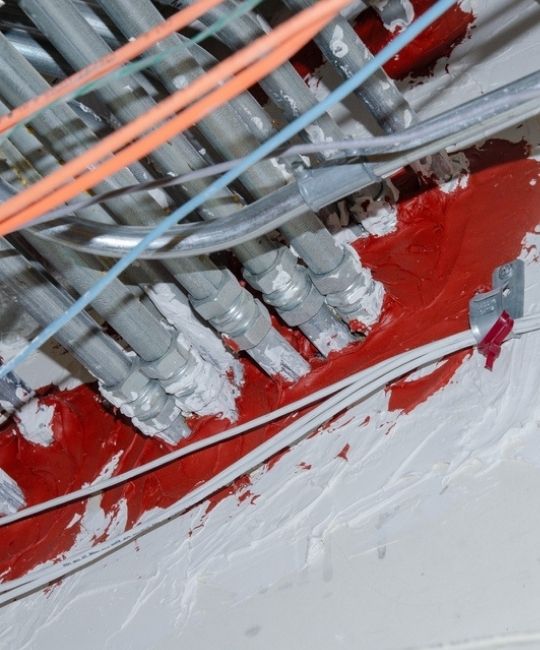
Fire stopping is critical because compartmentation only works if the barriers forming the compartment remain intact.
A fire-resisting wall or floor can be undermined by relatively small defects. Unsealed cable penetrations, poorly fitted pipe collars, missing fire stopping, damaged batts, incorrect sealant, oversized openings or unprotected service routes can all reduce the effectiveness of the building’s passive fire protection.
Correctly installed and maintained penetration sealing helps:
- Limit the spread of fire and smoke
- Protect escape routes and adjoining compartments
- Maintain the integrity of fire-resisting walls and floors
- Support the wider fire strategy of the building
- Reduce risk to occupants, property and business continuity
- Provide clearer evidence for maintenance and compliance records
Our inspections help clients identify where fire stopping may be missing, damaged, unsuitable, incomplete or incorrectly installed, allowing remedial action to be planned in a practical and proportionate way.
Know The Risks. Plan The Solutions.
What Our Penetration Sealing & Fire Stopping Inspections Cover
During a penetration sealing and fire stopping inspection, our technicians review visible fire stopping systems and service penetrations to assess whether they appear suitable, complete and properly maintained.
Coated Mineral / Rock Wool Batts
We inspect coated mineral fibre and rock wool batt systems around service penetrations, risers, walls and compartment lines, checking for damage, poor fitting, gaps, incomplete sealing or unsuitable installation.
Mortar Compound Seals
We assess mortar-based fire stopping systems used around service openings, ducts, pipes and penetrations, identifying cracking, shrinkage, missing material, poor bonding or areas where the seal may be disturbed.
Fire Stopping Pillows & Bags
We inspect fire stopping pillows and bags where used around temporary or adaptable service penetrations, checking whether they are present, correctly located, adequately fitted and suitable for the opening.
Pipe Collars, Pipe Sleeves & Pipe Wraps
We review the pipe collars, pipe sleeves and pipe wraps used to protect combustible or insulated pipework passing through fire-resisting elements, diligently checking condition, fixing, positioning and visible suitability.
Intumescent Mastic & Fire-Rated Sealant
We thoroughly inspect intumescent mastic, fire-rated sealants and linear gap seals to identify missing, damaged, cracked, poorly applied or inappropriate sealing around penetrations, joints and service routes present on-site.
Service Penetrations & Building Openings
We check visible penetrations created by cables, pipes, trays, conduits, ductwork and other building services to identify unsealed openings, excessive gaps, mixed-service penetrations and areas where further investigation may be required.
Clear, Evidence-Led Fire Stopping Reports
Following the inspection, we provide a clear report designed to help clients understand the condition of penetration sealing and fire stopping across the inspected areas.
Our reports can include location-specific findings, photographic evidence, descriptions of defects, system observations, compartmentation concerns and practical remedial recommendations. Where required, findings can be organised by floor, area, riser, room, service route or penetration type.
The aim is to provide information that can actually be used by responsible persons, building owners, managing agents, contractors and facilities teams. Clear reporting helps clients prioritise remedial works, instruct competent contractors and maintain a more reliable record of passive fire protection within the building.
Our Penetration Sealing & Fire Stopping Inspection Process
Our penetration sealing and fire stopping inspection process provides a clear, evidence-led review of service penetrations, fire stopping systems and compartmentation lines. We inspect accessible areas, record visible defects, capture photographic evidence and provide practical recommendations to help maintain the fire resistance of walls, floors, ceilings and other separating elements.
Site Review & Inspection Planning
We review the building, available drawings, compartmentation information and areas requiring inspection so that the survey can be planned effectively.
Visual Inspection of Fire Stopping Systems
Our technicians inspect visible service penetrations, fire stopping systems, risers, voids, access areas and compartment lines where access is available.
Photographic Evidence
We record defects and key observations using clear photographic evidence, helping clients understand the nature and location of any issues identified.
Defect Identification
We identify visible signs of missing, damaged, incomplete, unsuitable or poorly maintained fire stopping and highlight areas where further investigation may be required.
Practical Reporting
We provide a structured inspection report with clear findings and recommendations to support remedial planning, maintenance records and ongoing fire safety management.
Fire Stopping, Compartmentation & Building Compliance
Approved Document B makes clear that where openings, joints or imperfections occur in fire-separating elements, they should be adequately fire-stopped so that the fire resistance of the element is not impaired.
In practical terms, this means service penetrations should be kept as few as possible, as small as practicable and properly protected where services pass through fire-resisting construction.
Independent Fire Inspections Ltd provides penetration sealing and fire stopping inspections to help clients assess these critical details. Our work supports responsible persons, landlords, managing agents, principal contractors, facilities teams and building owners who need clearer information about the condition of passive fire protection within their property.
Common Fire Stopping Defects We Identify
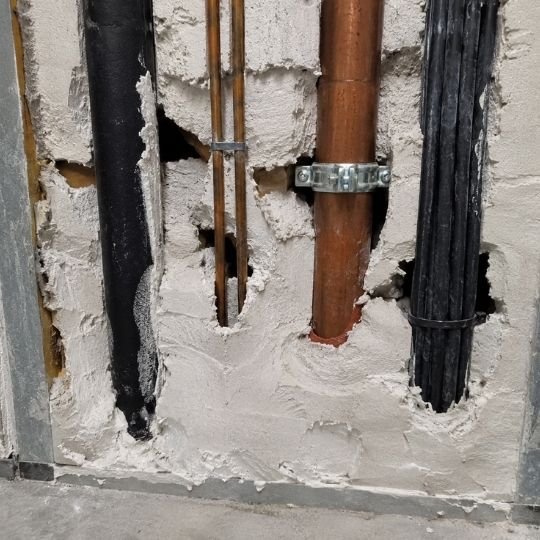
Fire stopping defects are often hidden in risers, ceiling voids, service cupboards, plant areas, corridors and behind access panels. Common issues include:
- Unsealed service penetrations
- Oversized openings around pipes, cables or ducts
- Missing or damaged fire stopping materials
- Incorrect use of expanding foam or non-fire-rated products
- Poorly fitted coated batt systems
- Incomplete or cracked sealant
- Missing pipe collars, wraps or sleeves
- Damaged fire stopping after later service works
- Mixed services passing through one opening without suitable protection
- Lack of identification, labelling or installation records
- Fire stopping not aligned with the required fire resistance of the compartment line
Our reports help clients understand where these issues are located, what has been observed and what remedial action may be needed.
How Often Should Fire Stopping Inspections Occur?
The frequency of penetration sealing and fire stopping inspections depends on the building type, occupancy, risk profile, access arrangements and the likelihood of later service works affecting compartmentation.
Fire stopping should be reviewed whenever new services are installed, existing penetrations are altered, refurbishment works are completed or concerns are identified during routine building management. High-use, complex or frequently altered buildings may benefit from more regular inspections to help maintain an accurate record of passive fire protection condition.
Why Choose Independent Fire Inspections Ltd?
Independent Fire Inspections Ltd provides specialist passive fire inspection services with a practical, evidence-led approach.
We understand that fire stopping inspections need to be clear, structured and useful. Our role is to help clients identify visible defects, understand potential risks and make informed decisions about remedial works.
Clients choose us because we provide:
Specialist passive fire inspection experience
Practical & professional remedial client recommendations
Inspection services for occupied, live and complex buildings
Clear reports with photographic evidence
A professional approach focused on safety, clarity and action
Ongoing support for fire-stopping and compartmentation issues
Penetration Sealing & Fire Stopping For Different Buildings
Independent Fire Inspections Ltd supports clients across a wide range of building types, including:
- Residential apartment blocks
- Student accommodation
- Healthcare buildings and hospitals
- Schools, colleges and universities
- Offices and commercial premises
- Hotels and hospitality buildings
- Care homes and supported living
- Industrial and mixed-use buildings
- Public sector buildings
- Construction and refurbishment projects
Each building presents different risks. Older properties may contain historic service alterations, while newer buildings may require inspection to verify that installed fire stopping aligns with design intent, handover information or compartmentation requirements.
Supporting Responsible Persons, Contractors & Building Managers
Penetration sealing and fire stopping inspections are valuable for anyone responsible for managing, maintaining or delivering passive fire protection. Our service can support:
- Responsible persons
- Building owners
- Managing agents
- Landlords and housing providers
- Facilities managers
- Principal contractors
- Fire stopping contractors
- Developers and project teams
- Healthcare and education estates teams
- Public sector property teams
By providing clear findings and evidence-led reporting, we help clients understand the current condition of fire stopping within their building and plan appropriate next steps.
Need A Penetration Sealing & Fire Stopping Inspection?
Speak to Independent Fire Inspections Ltd for clear, practical support with penetration sealing and fire stopping inspections.
Penetration Sealing & Fire Stopping Inspection FAQs
What is penetration sealing and fire stopping?
Penetration sealing and fire stopping are passive fire protection methods used to seal gaps, openings and service penetrations through fire-resisting walls, floors and ceilings.
They help reinstate compartmentation and restrict the spread of fire and smoke through the building.
Why are penetration sealing and fire stopping important?
Penetration sealing and fire stopping are important because even small openings in fire-resisting construction can allow fire and smoke to spread.
Correct fire stopping helps protect escape routes, maintain compartmentation and support the wider fire safety strategy of a building.
What does a fire stopping inspection include?
A fire stopping inspection can include a review of visible service penetrations, coated batt systems, mortar seals, pipe collars, pipe wraps, sleeves, pillows, bags, intumescent mastic, fire-rated sealants and other fire stopping systems.
The inspection identifies visible defects and provides clear reporting with photographic evidence.
What are common fire stopping defects?
Common defects include missing fire stopping, unsealed service penetrations, damaged coated batts, cracked sealant, oversized openings, missing pipe collars, incorrect materials, poorly fitted systems and damage caused by later service works.
Who needs a penetration sealing and fire stopping inspection?
Building owners, responsible persons, landlords, managing agents, facilities managers, contractors and project teams may all need penetration sealing and fire stopping inspections to understand the condition of passive fire protection within a building.
Can fire stopping inspections support remedial works?
Yes. A fire stopping inspection can help identify the location and nature of defects so that remedial works can be planned, prioritised and instructed.
Clear reporting also helps contractors understand what needs attention.
Do you inspect fire stopping in occupied buildings?
Yes. Independent Fire Inspections Ltd can carry out penetration sealing and fire-stopping inspections in occupied buildings, subject to access arrangements, safety requirements, and the agreed inspection scope.
Can you inspect risers, cupboards and service voids?
Yes. Where safe and accessible, we can inspect risers, service cupboards, plant areas, ceiling voids and other locations where service penetrations and fire stopping defects are commonly found.
Browse Our Resources
Our Services
Practical passive fire inspection services covering fire doors, compartmentation, fire stopping and key life safety measures.
Accreditations
Trusted fire safety expertise supported by recognised training, professional standards and inspection-led knowledge.
Learn About Us
Experienced fire inspection specialists helping clients identify defects, reduce risk and maintain safer buildings.
Read Our Blogs
Useful fire safety guidance, inspection advice and updates on passive fire protection, compliance and building safety.
Want To Know More About Our penetration Inspections?








Send Us A Message
Need A Professional Fire Door Inspection?
Speak to Independent Fire Inspections for clear, practical fire door inspection support. We provide detailed inspection reports, photographic evidence and remedial recommendations to help you understand the condition of your fire doors and manage your fire safety responsibilities.